
M.Sc. NOOR SALMAN
1
ST
LAB
Blood and their value in different age

Function of Blood
●
Blood is responsible for…..
●
Transporting gases (oxygen & carbon dioxide)
●
Transporting waste products
●
Transporting nutrients
●
Helping remove toxins from the body
•
Blood makes up 6–8% of our
total body weight.
•
Normal adult blood volume is 5 L.
•
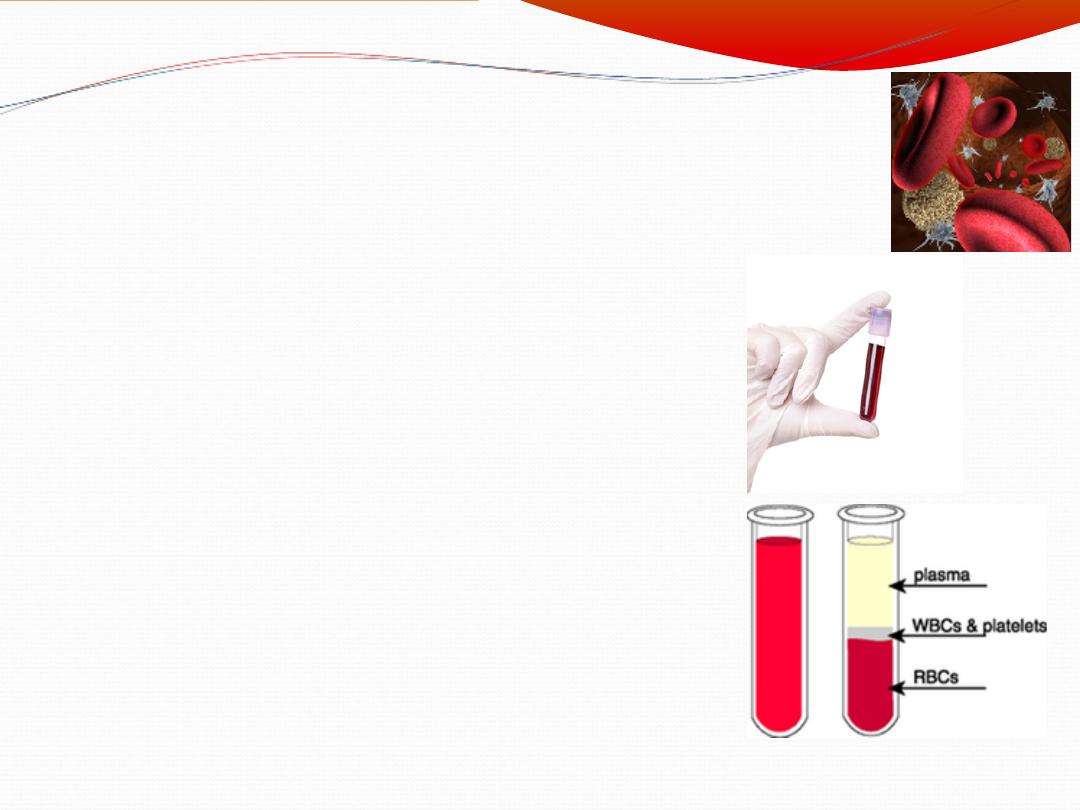
Blood is made up of cellular
material in a fluid called plasma.

•
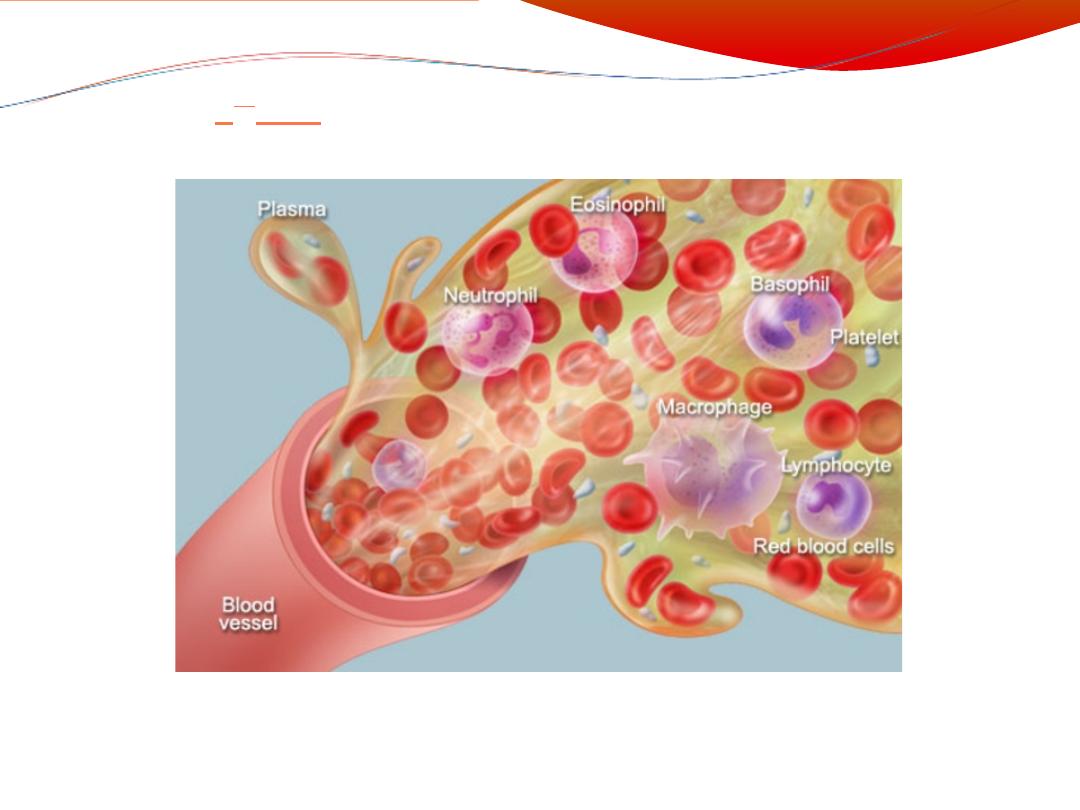
Blood is a circulating tissue consisting of three types
of cells.
1.
Red Blood Cells
→ Erythrocytes
2.
White Blood Cells
→ Leukocytes
3.
Platelets
→ Thrombocytes
•
The cells listed above are suspended in a liquid
known as plasma.
Composition of Blood
•
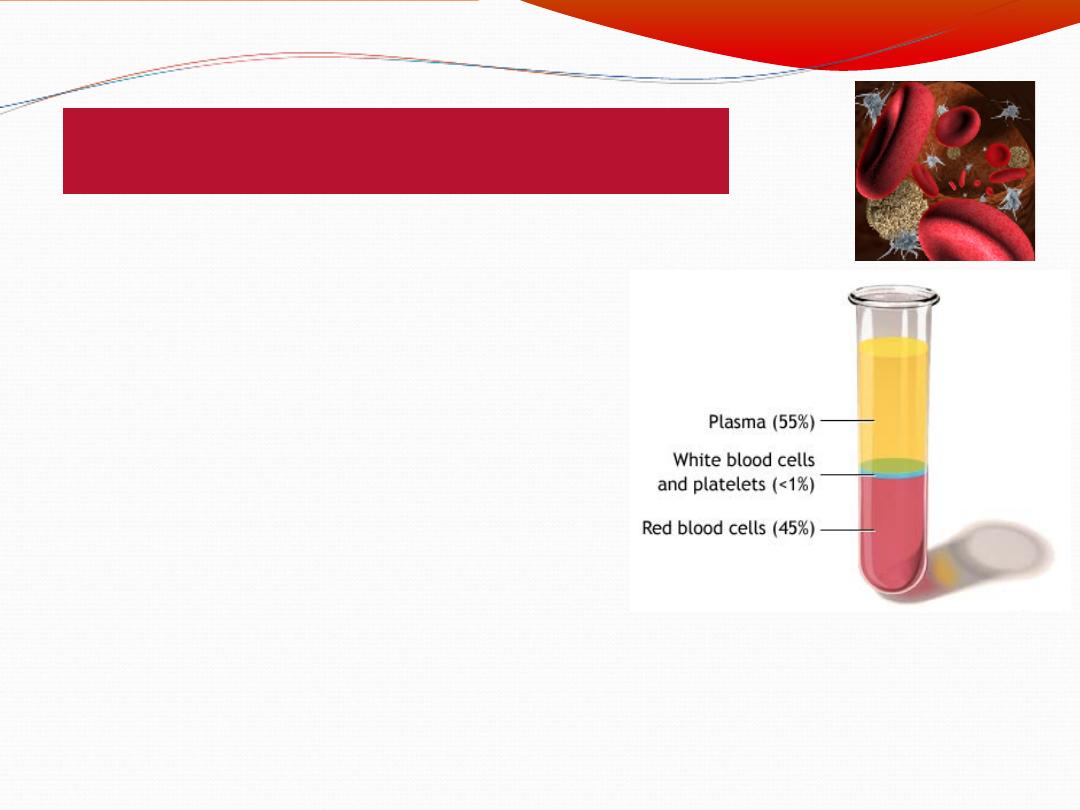
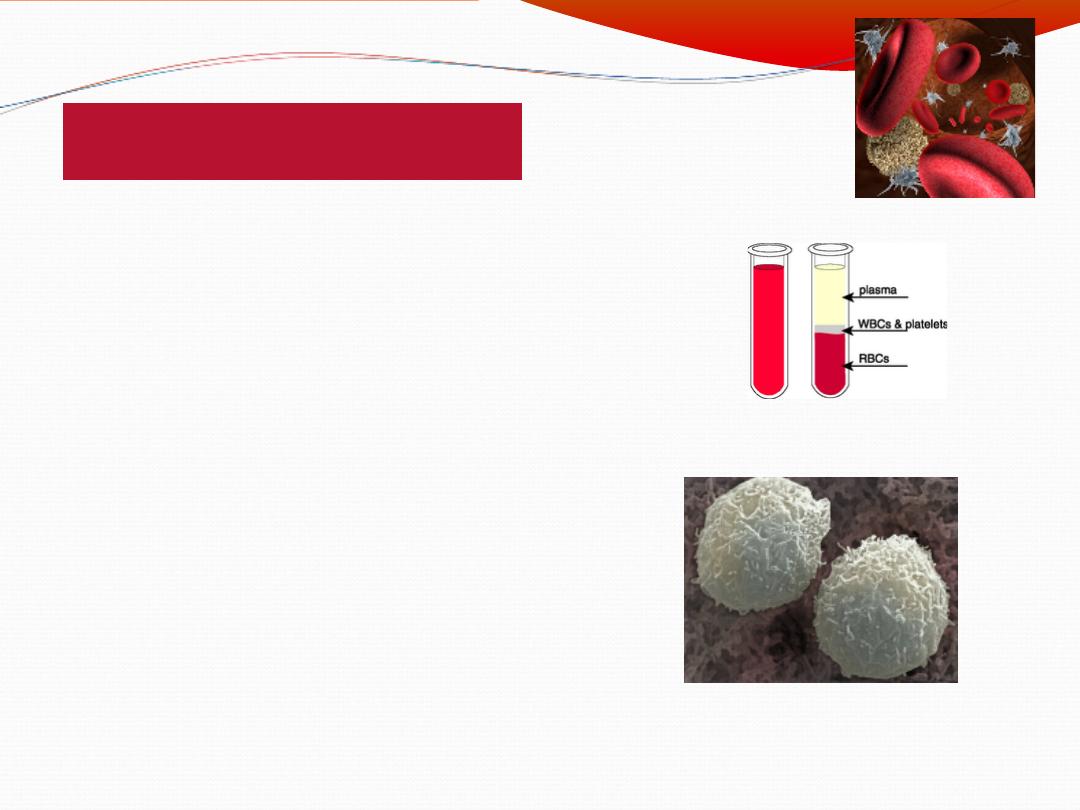
The blood is made up of cells
that are suspended in liquid
called plasma.
•
Plasma makes up 55% of the blood.
•
Plasma is made of 90% water and
10% proteins, lipids, carbohydrates,
amino acids, antibodies, hormones,
electrolytes, waste, salts, and ions
•
Blood cells make up the remaining
45% of the blood.
•
Red blood cells make up 99% of the blood cells.
•
White blood cells and platelets make up the other 1%.
Red Blood Cells
•
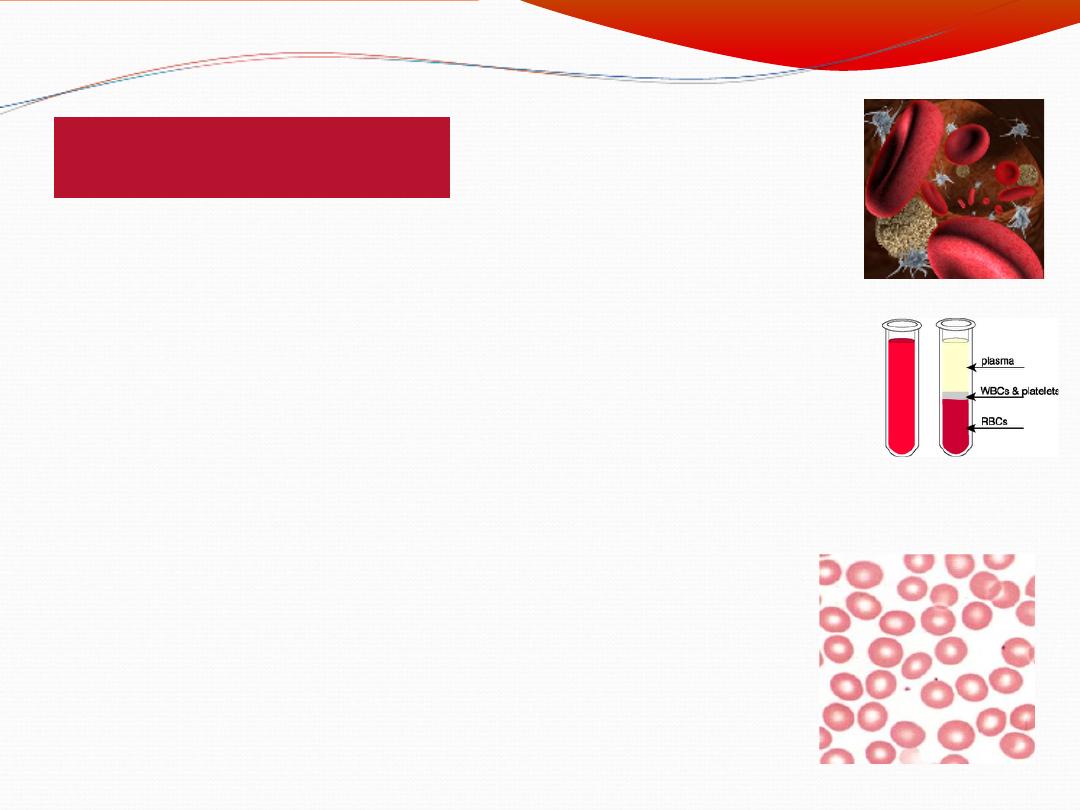
Erythrocytes or RBCs
—
Most abundant cell in the blood
(4 million – 6 million per microliter of blood)
—
Formed in the bone marrow
—
Mature forms do NOT have a nucleus
—
Shaped as biconcave disks
—
6-8 micrometers in diameter
—
Life span of about 120 days
—
Hemoglobin (iron protein)is
found in the RBC
—
Hemoglobin carries oxygen from the
lungs to the rest of the body and carbon
dioxide binds to the RBC and is taken to
the lungs to be exhaled.

Normal range of RBC
●
male: 4.7–6.1 million (mcL)
●
Female: 4.2–5.4 million
(mcL)
_children: 4.0_5.5 million
(mcL)
Abnormal range :
- increase called
Polycythemia
-Decrease called
Anemia
White Blood Cells
•
Leukocytes or WBCs
—
Largest sized blood cells
—
Formed in the bone marrow
and some in lymph glands
—
Primary cells of the immune system
—
Fights disease and foreign invaders
—
Contain nuclei with DNA,
the shape depends on type of cell
—
Certain WBCs produce antibodies
—
Life span is from 24 hours to several years
—
Size is 8-20 micrometers in diameter
—
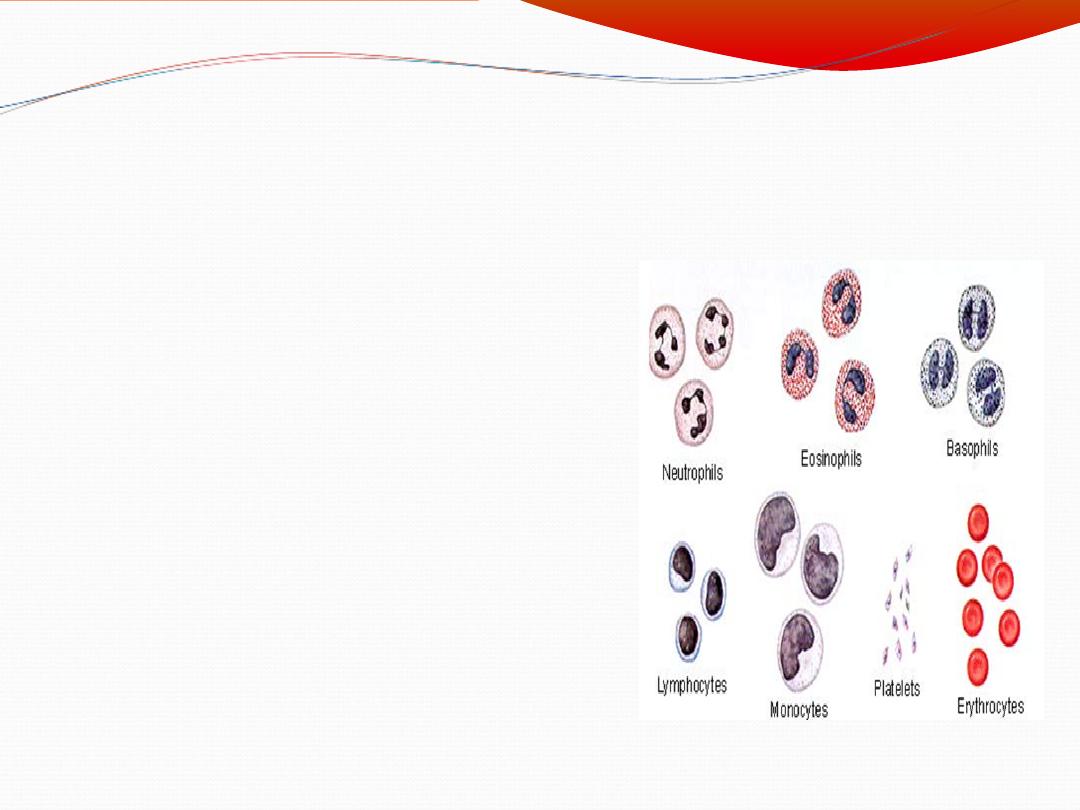
There are five different types of WBCs
1.
Neutrophils
2.
Eosinophils
3.
Basophils
4.
Lymphocytes
5.
Monocytes
Normal range of WBC
1.
IN adult
3,500_10.500
cells /mcL
2.
Neutrophils
55_73%
3.
Eosinophil
1_4%
4.
Basophils
0.5_1%
5.
Lymphocytes
20_40%
6.
Monocytes
2_8%

Abnormal range of WBC
-Decrease called
Leukopenia
-
Increase called
leukocytosis
Platelets
—
Thrombocytes or PLTs
—
Formed in the bone marrow
—
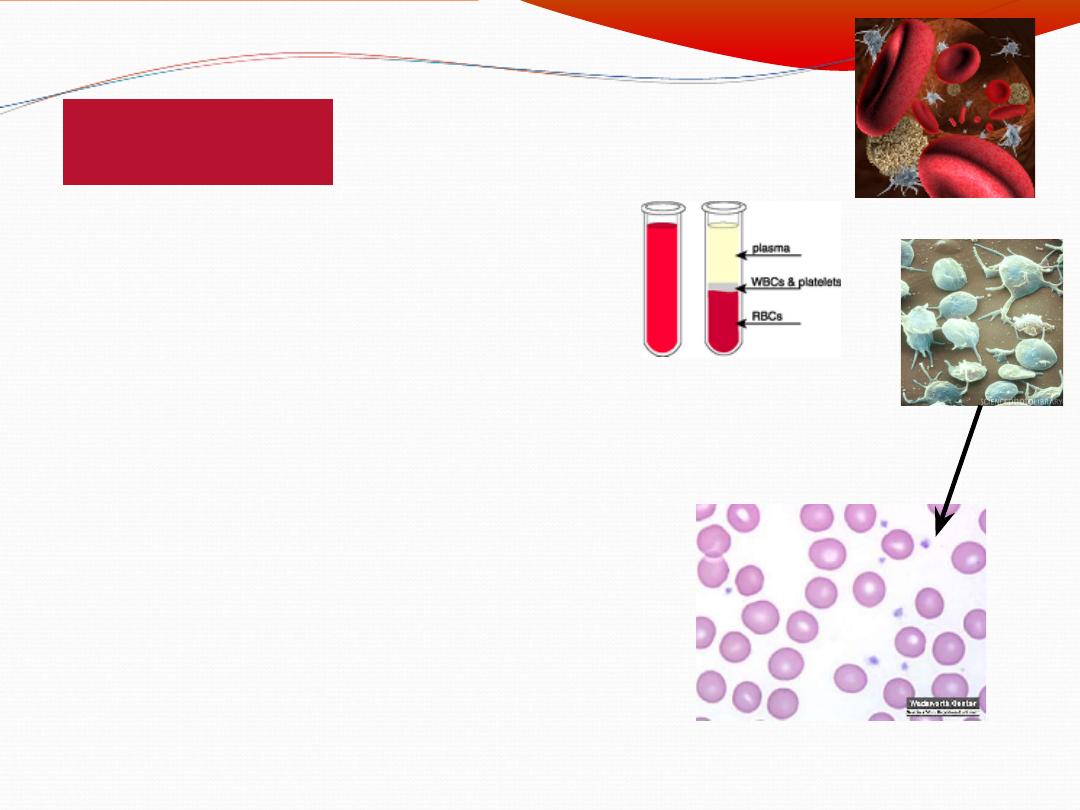
Fragments from the cytoplasm of megakaryocytes
—
Smallest of the blood cells
—
1-4 micrometers in diameter
—
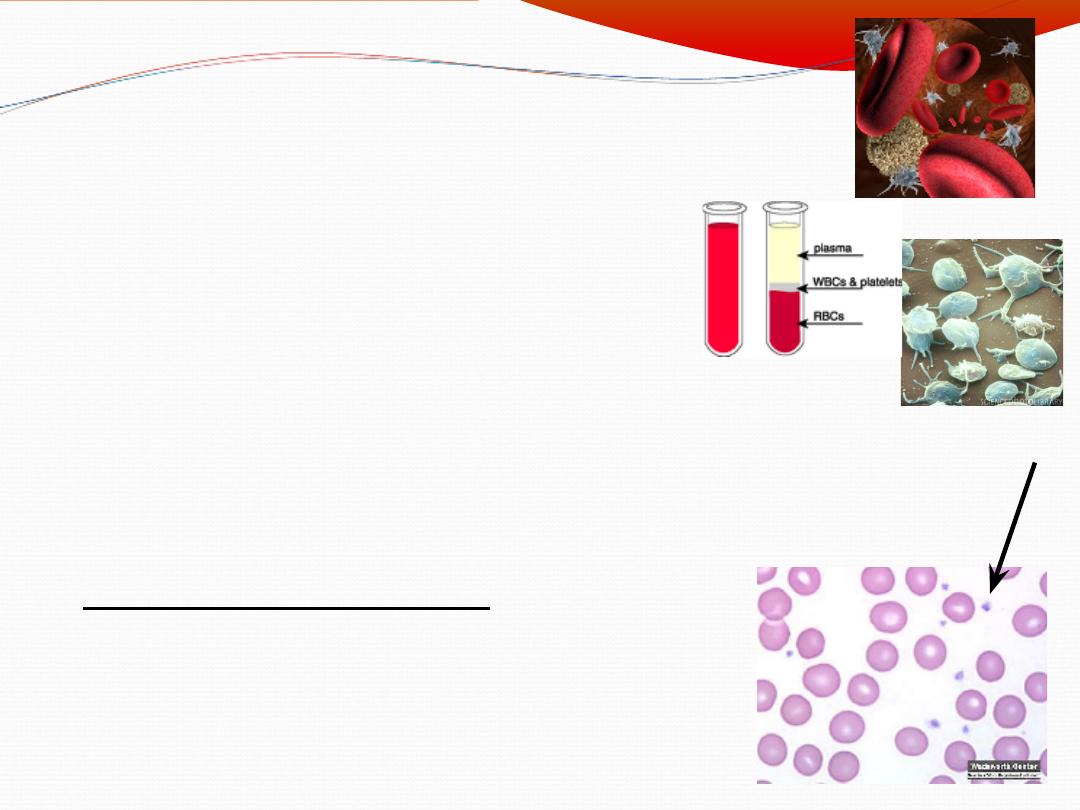
Shape can be round, oval, or appear spiky
—
Life span of around 8-12 days
•
Platelets
—
Involved in the clotting process
—
Seal wounds and prevent blood loss
—
Help repair damaged vessels
—
150,000 – 450,000 per microliter of blood
—
Platelets stain bluish with reddish or purple granules.
Abnormal range of platelets
Increase number called
thrombocytosis
Decrease number called
thrombocytopenia